ABBY + 1
Case Study

Anischitology

Aditya Birla Sun Life Insurance
Scroll
Discipline
Integrated Brand Communication
Client
Aditya Birla Sun Life Insurance
Scope
Microsite · Print · Social Media · Influencer · PR
The Objective
India is one of the fastest-growing economies — yet 73% of its citizens say they are extremely worried about their future. Aditya Birla Sun Life Insurance had the data to prove it. The challenge was making a complex, 49-statement nationwide study impossible to ignore.
Impressions
1 Million+ impressions through the microsite rollout
Media Value
₹2.03 Cr AVE · 200+ PR & news articles secured
Reach
3.9+ lakh influencer reel views · 7.3K shares · 13K likes
01
A nationwide study spanning 3,583 respondents across 20 cities revealed an Anishchit score of 79 — but the real problem was getting people to actually engage with it.
Aditya Birla Sun Life Insurance conducted one of India's most comprehensive anxiety studies — 49 statements, 11 life themes, 20 cities. The findings were significant. But data of this scale, presented as a traditional report, risked being overwhelming and ignored. The mandate was clear: take complexity and make it visible, accessible, and part of everyday conversation. The answer was not a campaign. It was an integrated communication ecosystem built around one central truth — India's anxiety is real, measurable, and addressable.
Anischitology for Aditya Birla Sun Life Insurance — Hyphen Brands case study
02
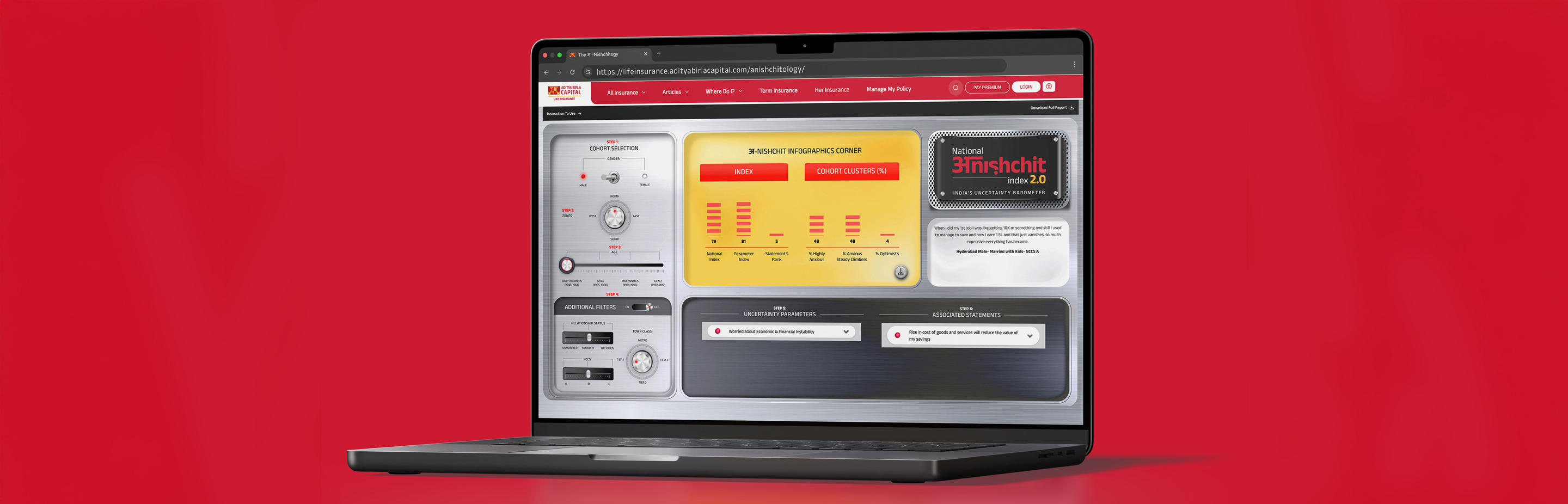
At the centre of everything was an interactive microsite — built on skeuomorphism, designed to make complex data feel instinctive to navigate.
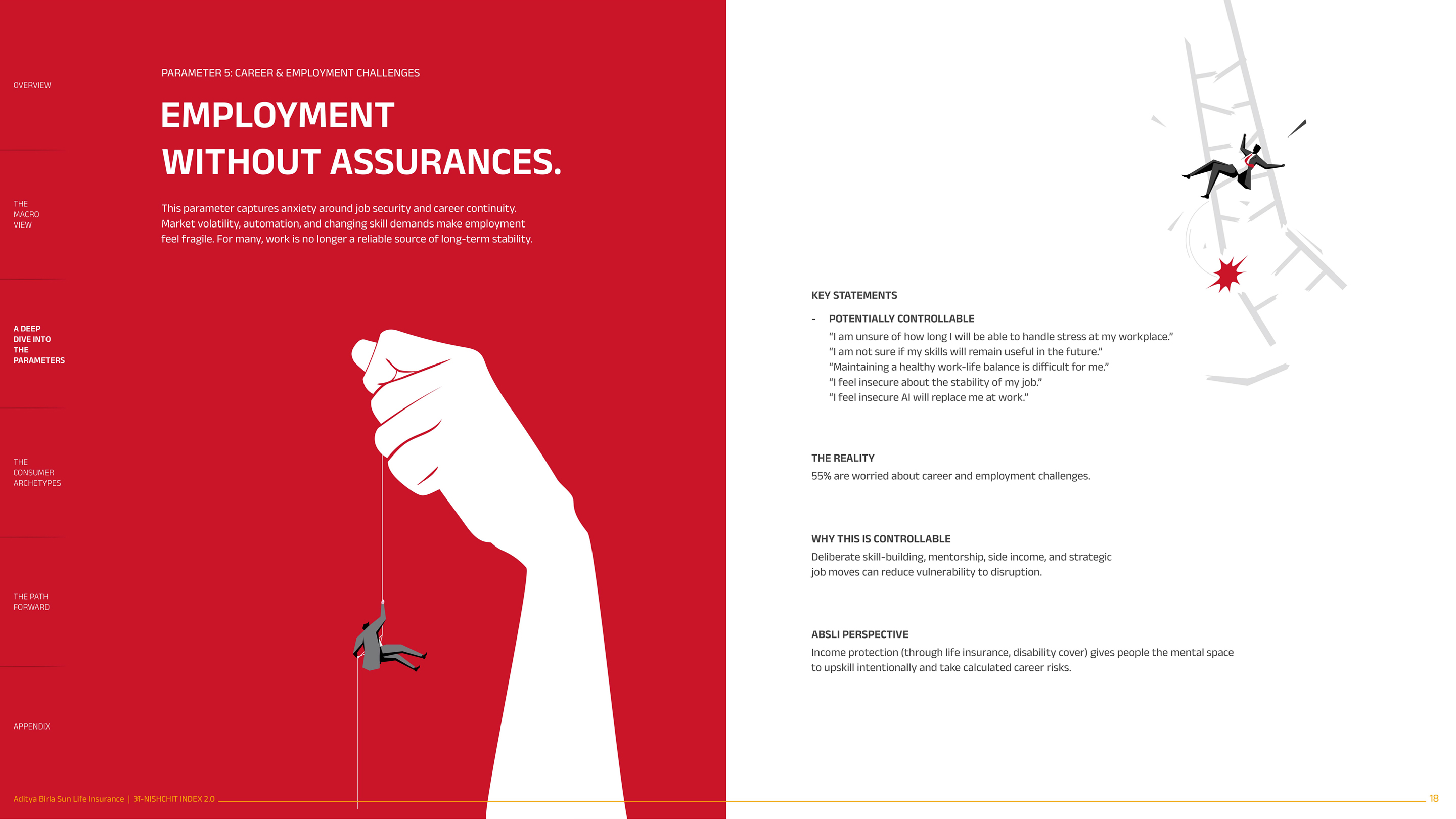
The microsite was not a digital brochure. It was built as an experience — translating 49 data points into an interface people could move through without feeling overwhelmed. Skeuomorphic design principles made abstract numbers feel tangible. Each of the 11 life themes — income, savings, health, retirement, well-being and more — had its own visual language and navigation layer. People could find their own anxiety reflected in the data, making the findings personal rather than statistical.
Anischitology microsite
03
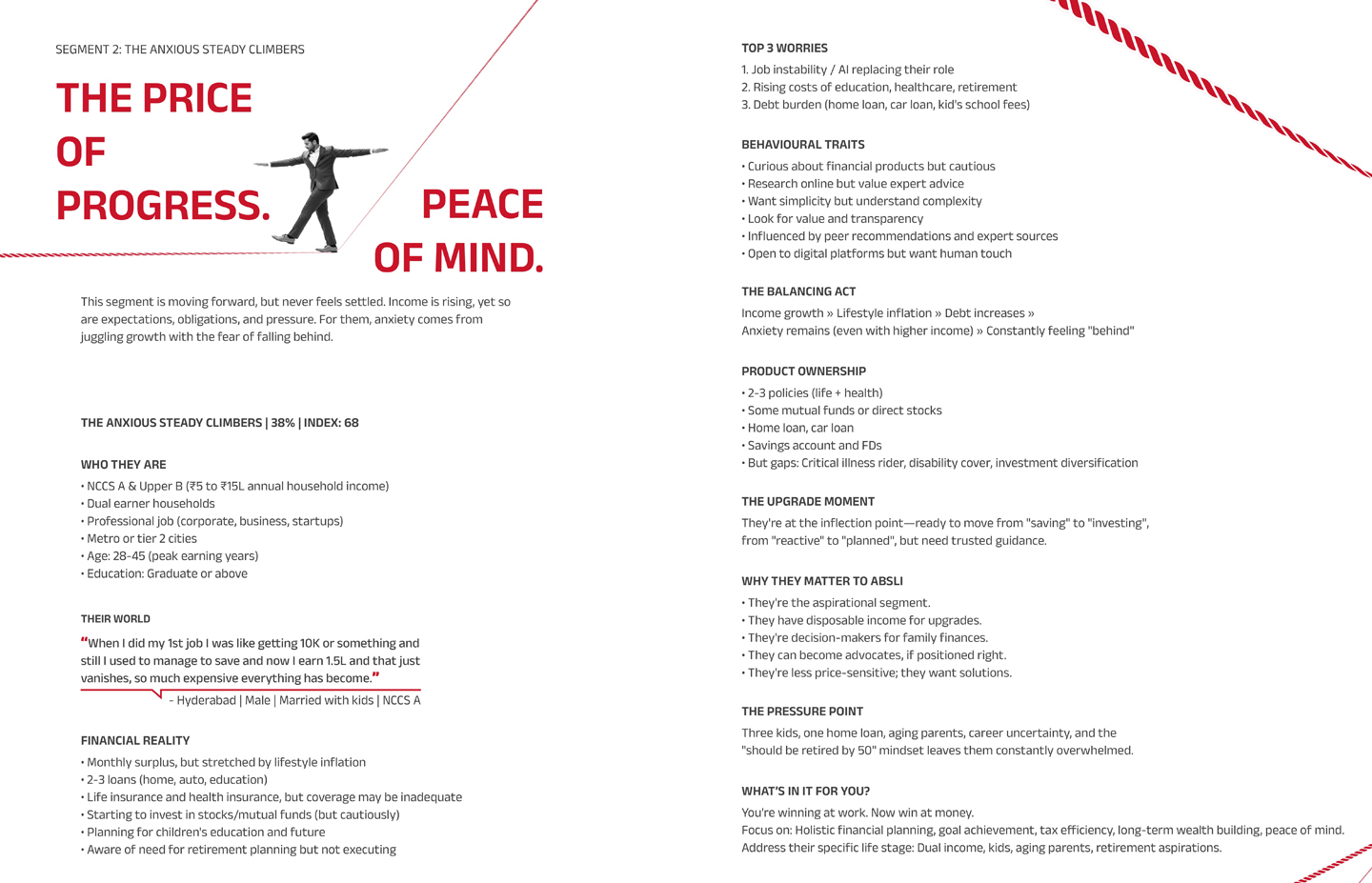
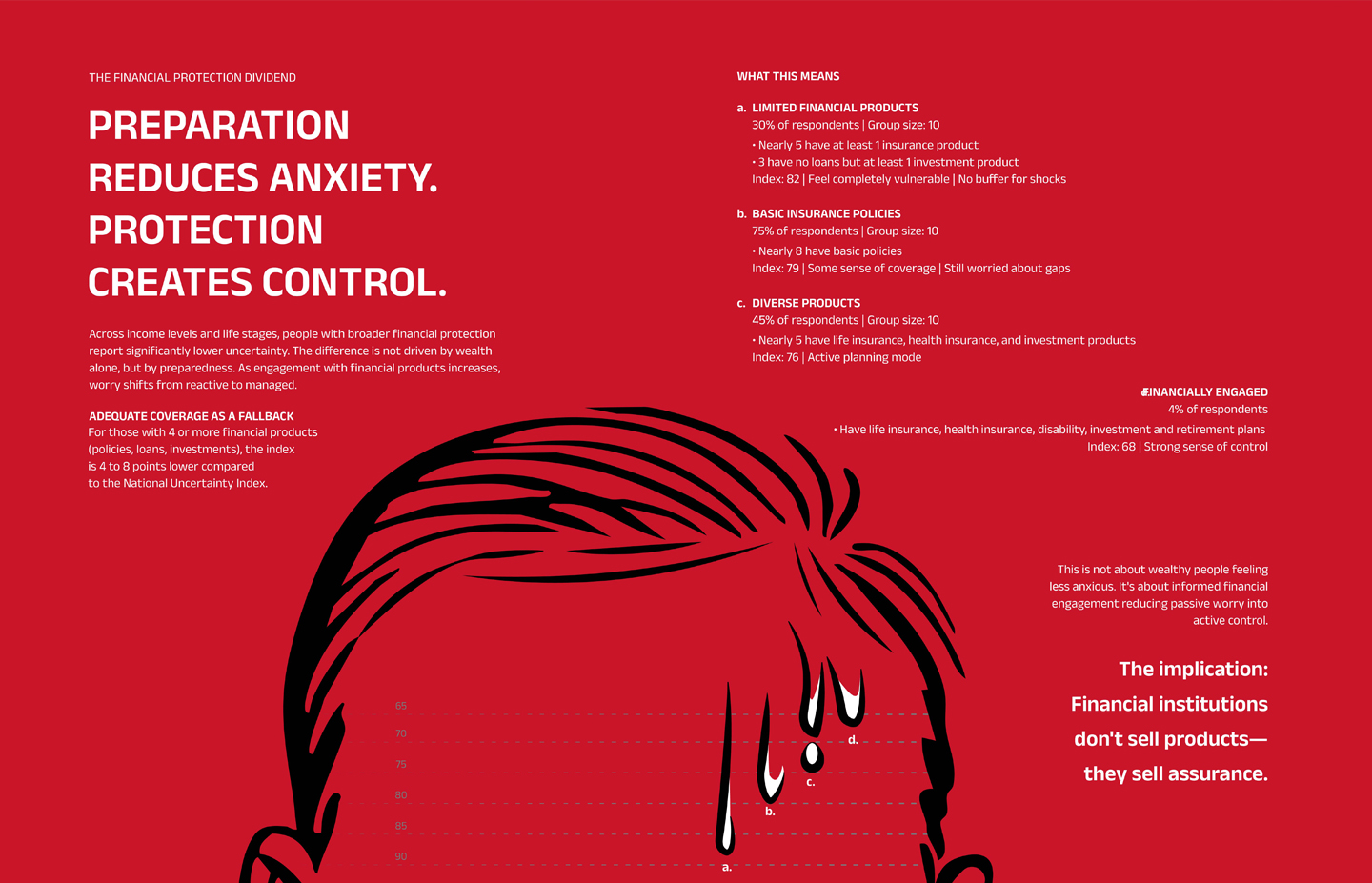
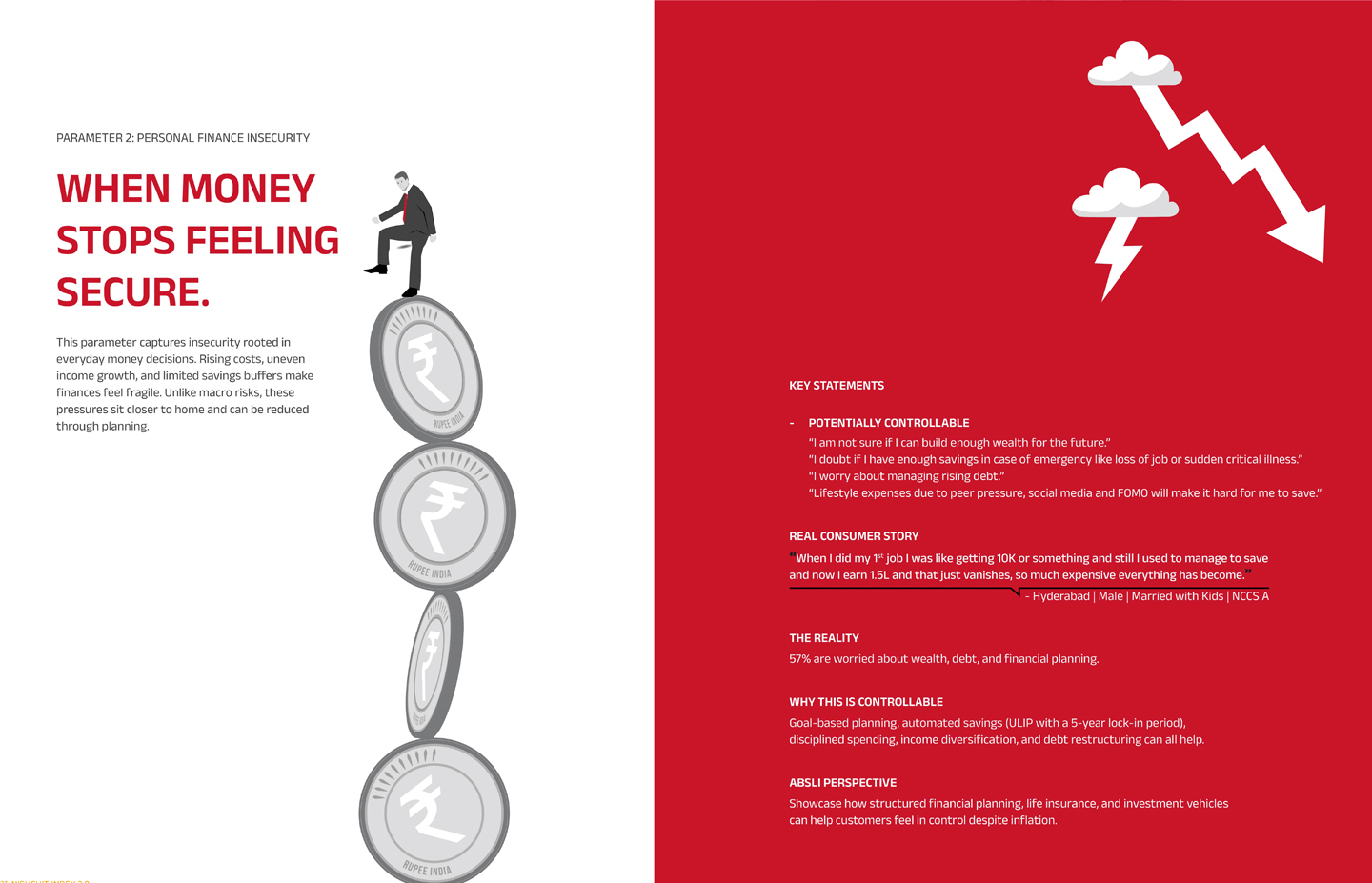
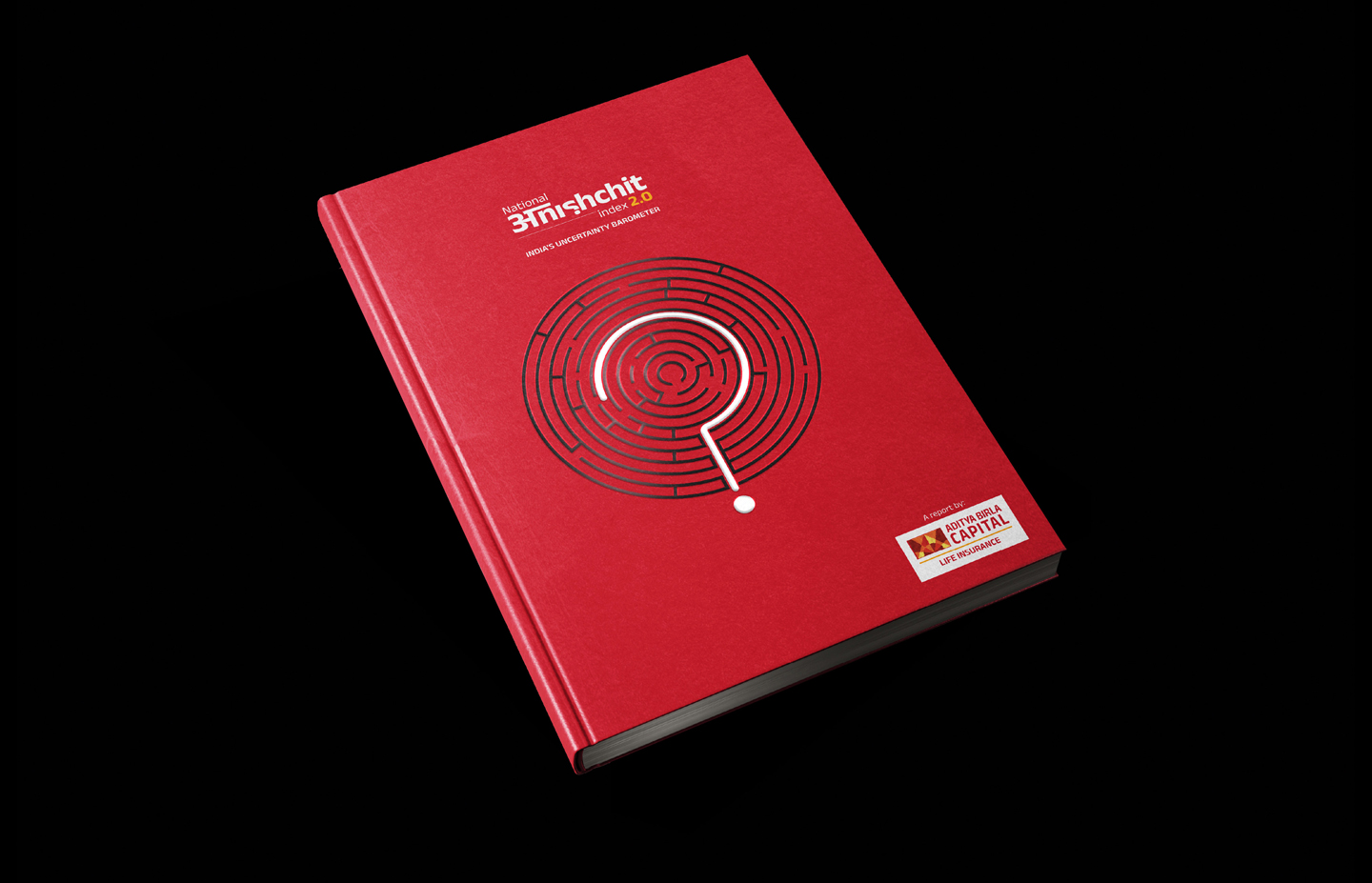
The findings were redesigned into a printed book, taken out across internal channels, social media, regional creators, and press mailers to 20 cities — each piece calibrated for its platform.
A printed book gave the data physical authority — clear structure and bold graphics made it reference-worthy rather than disposable. Across internal channels, the study became a conversation starter within the organisation. On social media, insights were broken into formats people could engage with. Regional creators interpreted anxieties in local contexts, making them relatable and immediate. 31 digital direct mailers reached 16,000 employees across 20 cities. Press mailers took the story to journalists and editors — resulting in 200+ PR and news articles and ₹2.03 Cr in advertising value equivalent.
Anischitology print
Anischitology social
Anischitology regional
04
The Anischitology 2.0 went beyond being a report. It became a study widely referenced by journalists, market experts, and financial product developers across India.
1 million+ impressions. 768 custom cohorts created. 500 physical copies produced and distributed. 3.9+ lakh influencer reel views. 1.5+ lakh influencer reach. 17 insight-led editorial angles. What could have remained buried as a PDF became a nationally referenced study. The integrated rollout proved that with the right creative strategy, even research can become a cultural conversation — and a brand's most powerful communication tool.
Anischitology campaign

India is one of the fastest-growing economies. But its citizens are still anxious about what the future brings. To understand India's worries, Aditya Birla Sun Life Insurance conducted a nationwide study spanning 49 statements, 11 life themes and 3,583 respondents across 20 cities.

The findings revealed India's Anishchit score rose to 79, with 73% of respondents saying they are extremely worried about their future. But this was not just a measure of fear. It pointed to areas that could be addressed — from income and savings to health, retirement and well-being.

The challenge was not the depth of the research. It was getting people to engage with it. With traditional reports being overwhelming to interpret, with data hidden inside pages, the objective was to take a complex study and make it visible, accessible, and part of everyday conversation.

We created communication pieces across platforms to make the research easy to access and hard to ignore. At the centre was an interactive microsite — built on skeuomorphism, it translated complex data into an interface people could navigate instinctively.

The findings were also redesigned into a printed book. Inside, clear structure and bold graphics made it easier to read and reference. Across internal channels, the study became a conversation starter. On social media, insights were broken down into formats people could engage with. Regional creators interpreted anxieties in local contexts, making them relatable and immediate.

Press mailers took the story to 20 cities. And media across the country picked up the findings in PR articles, ensuring scale and credibility. Each piece worked together to do one thing: bring the Anischitology 2.0 into public view.

Next Project
Zee Zest
Ready to build an
extraordinary brand?
Brief Us →