

The brief arrived as a request for wall graphics. The site changed everything. When we walked into the atrium of the Indiabulls Finance Centre — the headquarters of one of India's fastest-growing corporate groups, a building that had become a landmark on the Mumbai skyline — the scale of the space made the original brief feel inadequate. This was a ten-storey void, an architectural statement in its own right. Posters and clever lines would have disappeared inside it. We went back to the client with a recommendation: don't decorate this space. Use it.
The case for India's first corporate art installation rested on a single insight about what Indiabulls needed its communication to do. Founded in 2000 by three young entrepreneurs as a financial services company, the group had grown in just fourteen years into a ₹19,320 crore corporate house with operations spanning finance, real estate, securities and power. That story — the scale of it, the speed of it, the ambition that drove it — was the brand's most powerful asset. The question was how to make employees and visiting business partners feel that story, not just know it. The answer had to be physical. It had to be impossible to ignore.
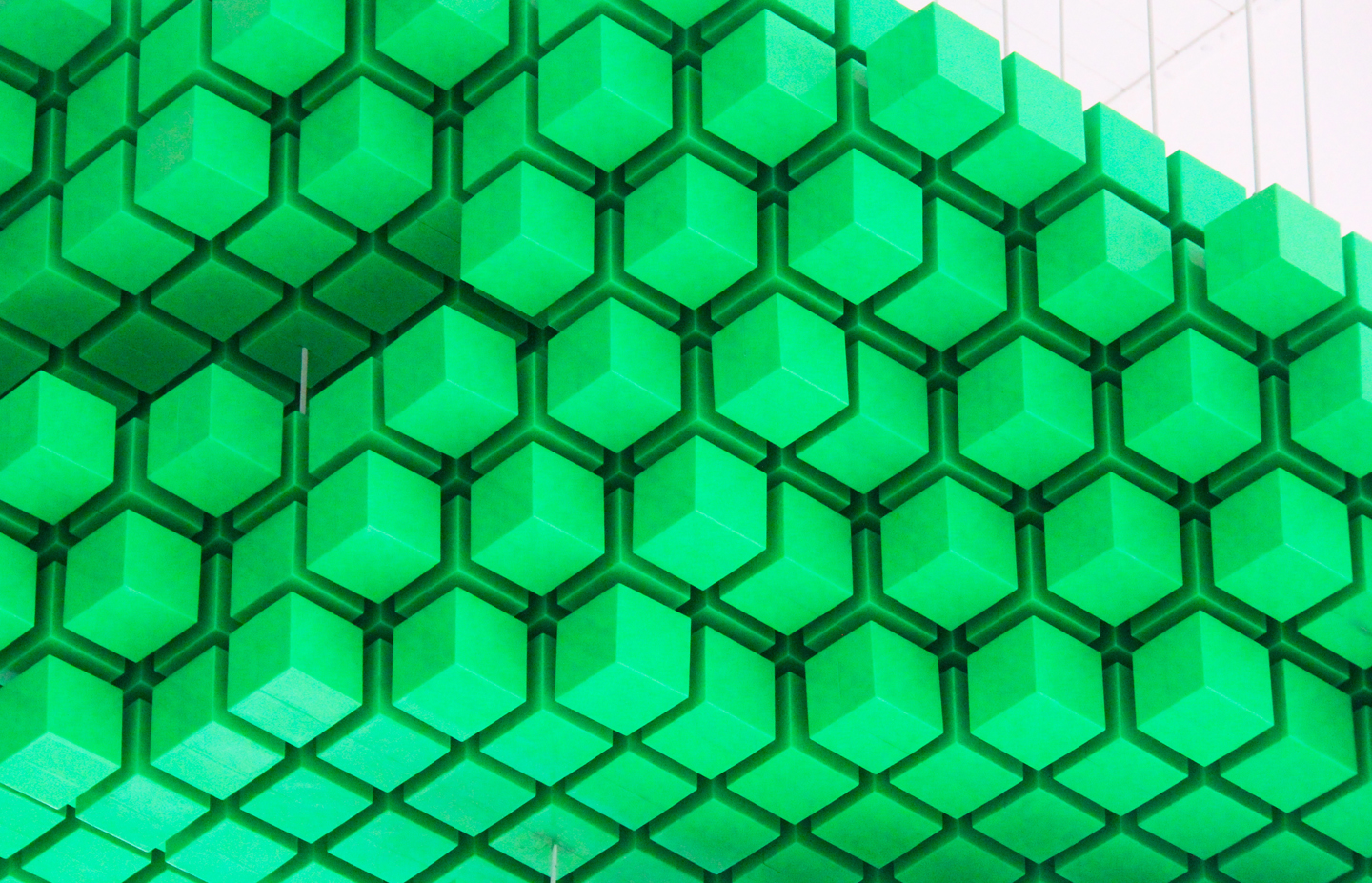
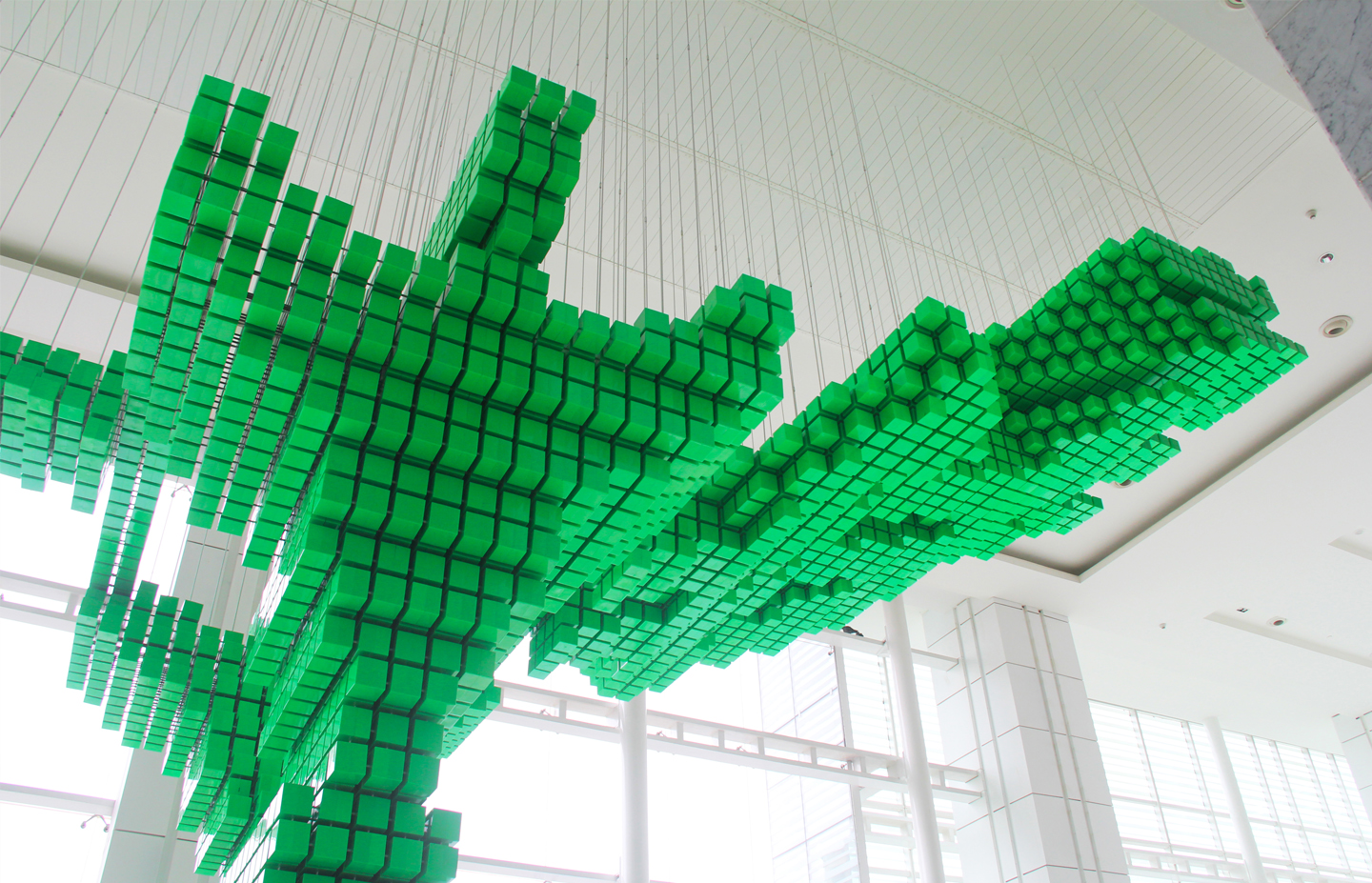
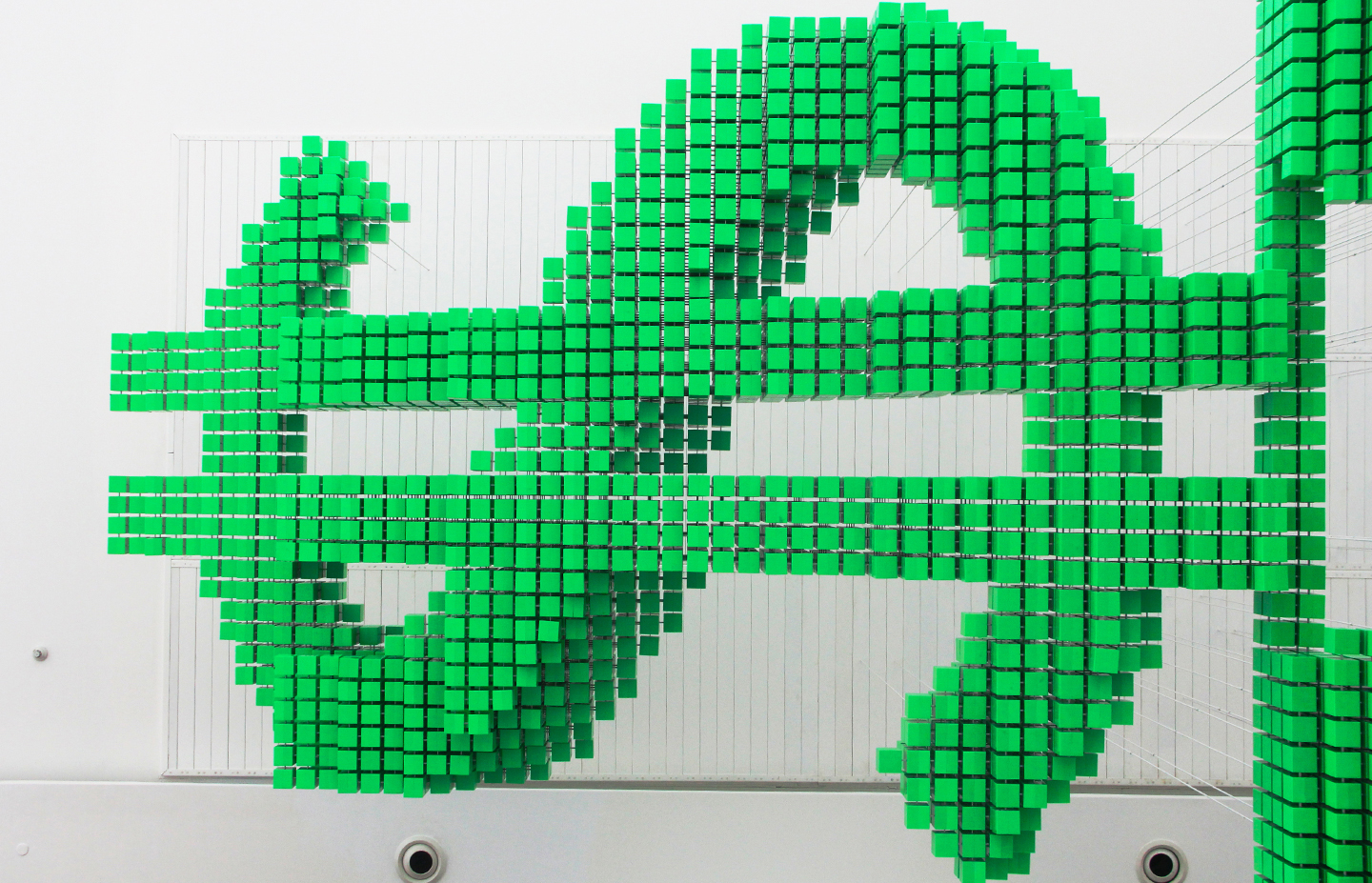
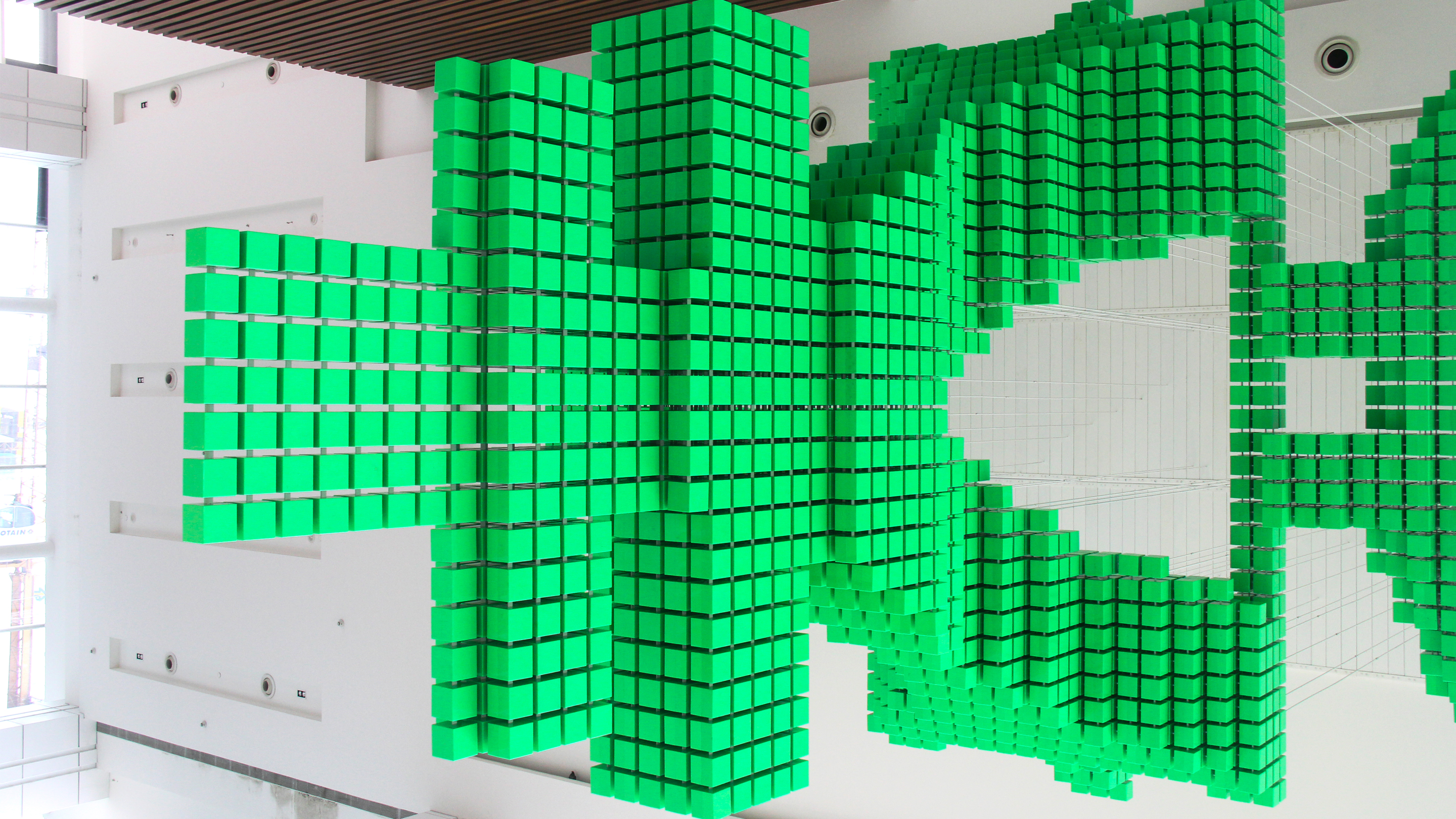
The design concept that emerged used the full volume of the atrium: 50 feet wide, 31 feet high, 16 feet deep. 10,600 individually positioned cubes, suspended together on a structure weighing 6.5 tonnes, arranged to form a figure of a man with wings. The choice of image was precise: Indiabulls' founding value of 'Never Stop' — the sky-is-the-limit attitude that defines the company's character — expressed not in words but in the most ancient and universal symbol of human aspiration. A figure that rises. The green of Indiabulls, and the universal colour of money, ran through the installation's palette.
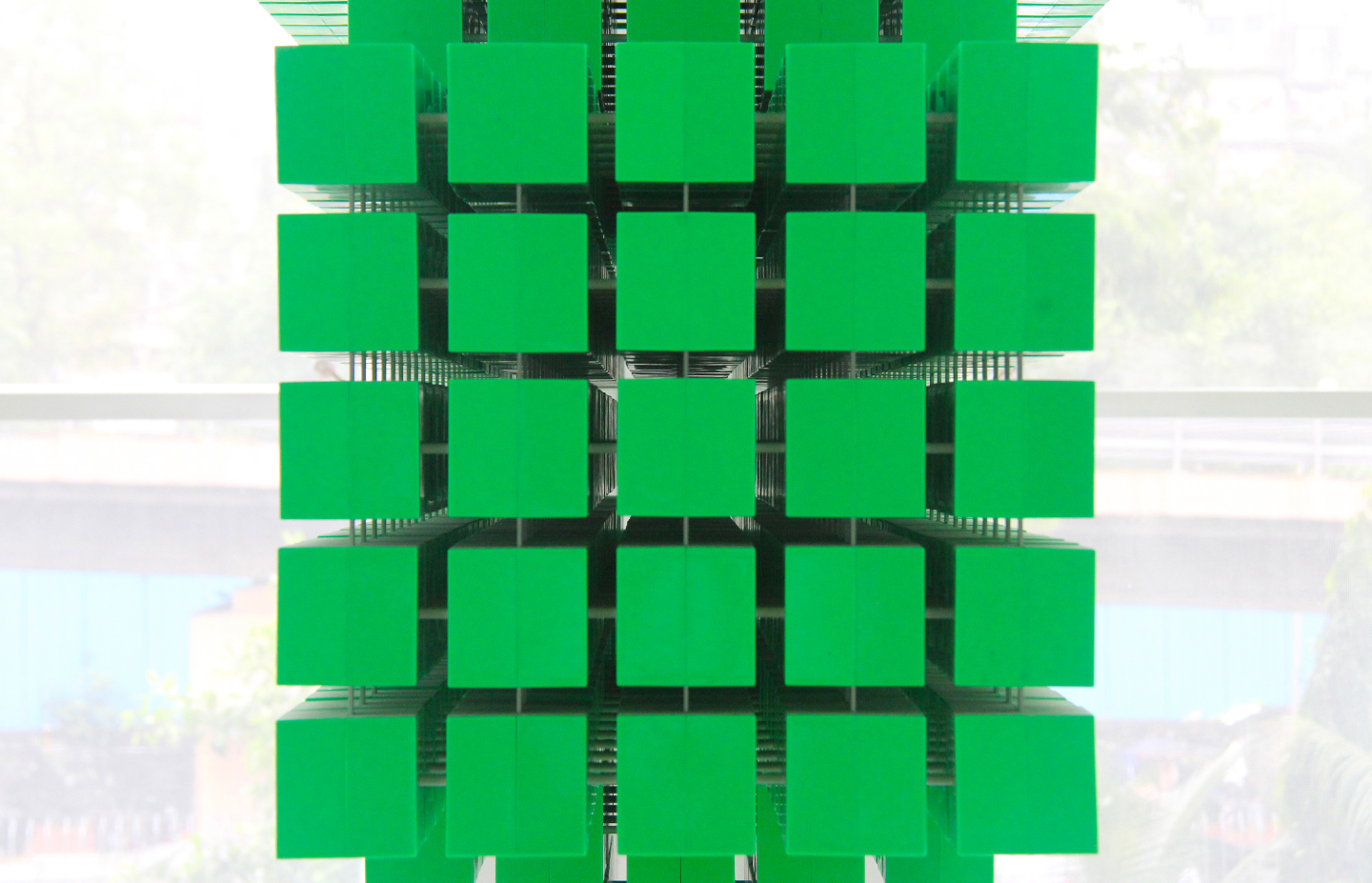
The installation's second layer of meaning was designed for the people who move through the space every day. As a viewer crosses the atrium, their changing point of view reveals something embedded in the same 10,600 cubes: currency symbols, visible from the side, invisible from the front. The structure that shows you ambition from one angle shows you origin from another. The rising man gives way to the financial foundations. It is a reminder — built into the architecture of the installation itself — that present accomplishments are only the next step in a longer journey. The static object uses the viewer's movement as a narrative device.
The project took fourteen months to complete from concept to installation. The fabrication and engineering challenges of suspending 6.5 tonnes of precisely positioned cubes in a working corporate atrium were considerable. The result justified every month of that work. The Indiabulls Finance Centre atrium became a destination: employees described stopping in the middle of the lobby just to look at it; visitors who had come for meetings stayed longer than they intended; and people with no connection to Indiabulls began arriving simply to see The Rising for themselves.
International design media covered the installation. Indian newspapers and magazines made it a story in its own right. And at the ABBY One Show 2014, the advertising industry's most prestigious Indian awards, The Rising was awarded the Design Grand Prix — the highest recognition available. It was the first time a corporate art installation had been entered in that category, because it was the first time one had existed. In building The Rising, Hyphen had not just solved a client brief. It had invented a new form of brand communication.